Palm Beach Gardens was incorporated June 20, 1959, as John D. MacArthur's garden city. The historic banyan trees, the city's history exhibit and nearby landmarks.
Last checked Oct. 9, 2026. History comes from the City of Palm Beach Gardens’ About PBG and Banyan Trees pages, the Palm Beach Gardens Historical Society and the Florida Department of State’s historical marker program; National Register listings from the National Park Service’s listed-properties file (May 22, 2026 edition).
Palm Beach Gardens is a young city with a single founder. On March 20, 1959, insurance magnate and landowner John D. MacArthur announced plans to develop about 4,000 acres of dairy grazing land into a community for 55,000 people, according to the city’s history. The state of Florida incorporated the city on June 20, 1959, the Palm Beach Gardens Historical Society says. There is no old downtown or historic district; the city’s landmarks are trees, a founder’s plan and its golf history.
Who to call
- Palm Beach Gardens Historical Society: pbghistory.org, founded 2008
- City history exhibit (Lakeside Center): Recreation Department, 561-630-1100
- City Hall: 561-799-4100, 10500 N. Military Trail
The garden city
MacArthur wanted to call the city Palm Beach City. The state marker at the city entrance says the Florida Legislature denied that name because it was too close to nearby Palm Beach, so he chose Palm Beach Gardens to fit his “garden city” plan. The city says he had streets and buildings routed around old trees, and that churches were the first buildings built.
The Historical Society says ground was broken for the city’s first structure in 1958, before incorporation, and that MacArthur appointed the first five council members. The state marker describes the new city as a “paper town” that at first existed only on paper.
Key dates
| Year | What happened |
|---|---|
| 1958 | Ground broken for the first structure, according to the Historical Society |
| March 20, 1959 | MacArthur announces the planned community |
| June 20, 1959 | The state incorporates Palm Beach Gardens |
| April 26, 1961 | The first banyan tree is moved to the city entrance |
| 1964-65 | MacArthur gives more than $2 million toward a new home for the Professional Golfers’ Association; the PGA moves into its clubhouse in March 1965 |
| 1971 | The city hosts PGA events including the Seniors and the World Cup |
| 1972 | The PGA leaves the property, later the J.D.M. Country Club and today BallenIsles |
| 1999 | The John D. and Catherine T. MacArthur Foundation sells about 14,000 acres, including about 5,000 in the city |
Sources: the city’s About PBG and Banyan Trees pages and the Historical Society.
The historic banyan trees
The best-known landmark is the pair of banyan trees at the city’s entrance, at MacArthur Boulevard near Northlake Boulevard. A Florida historical marker, “Historic Banyan Trees,” sponsored by the Seminole Chapter of the National Society Daughters of the American Revolution and the Florida Department of State, stands there.
According to the city, MacArthur heard in late 1960 that a resident of a neighboring town had to cut down a banyan threatening her house. The tree weighed 75 tons, stood 60 feet high and spread 125 feet. On April 26, 1961, two cranes lifted it onto trailers for the 5-mile trip; along the way the move snapped railroad signal lines and stopped a train for 13 minutes. It cost $30,000 and 1,008 hours of work. About a year later a second, 40-ton banyan joined it. The state marker says both came from Lake Park. “I can buy anything but age,” MacArthur said, according to the city. The trees appear on the city emblem.
Where to see the city’s history
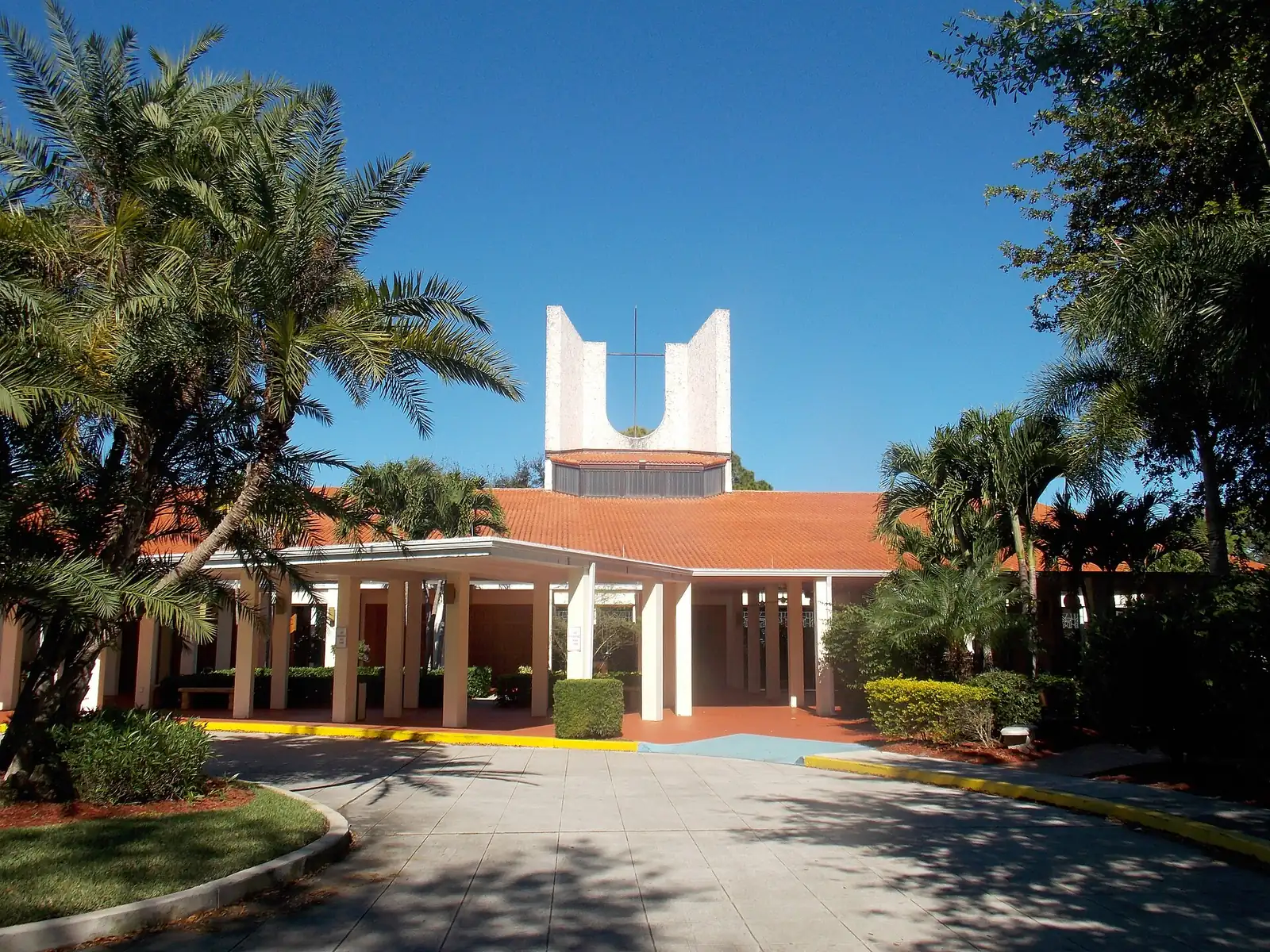
- Lakeside Center: the city turned the old Westminster Presbyterian Church on Military Trail into Lakeside, an extension of the Burns Road Community Center. It houses the city’s permanent exhibit of its history: newspaper clippings, photographs, maps, awards and scrapbooks kept by city volunteers and the Palm Beach Gardens Women’s Club. Call the Recreation Department, 561-630-1100, for hours.
- The Historical Society holds talks and field trips for members and the public; its events are listed on its website. Its book on the city is listed on its book page.
- The city emblem has four parts, the city says: MacArthur Beach, the MacArthur family plaid, the banyan tree and a family, with five stars for the five council members.
National Register of Historic Places
The National Park Service’s file of National Register properties, dated May 22, 2026, lists no property in Palm Beach Gardens. The nearest listings, with the year each was listed:
| Property | Town | Listed |
|---|---|---|
| Jupiter Inlet Lighthouse | Jupiter | 1973 |
| Kelsey City City Hall, 535 Park Ave. | Lake Park | 1981 |
| Jupiter Inlet Historic and Archeological Site | Jupiter | 1985 |
What this means for you
- Drive in on Northlake and turn onto MacArthur Boulevard to see the 1961 banyans and the state marker.
- The city’s own history exhibit is at Lakeside, by the Burns Road Community Center.
- For older history, the Jupiter Inlet Lighthouse and Lake Park’s Kelsey City City Hall are a short drive away.
Related: population and growth, parks and trails and moving to Palm Beach Gardens.
Frequently asked questions
When was Palm Beach Gardens founded?
John D. MacArthur announced the new community on March 20, 1959, and the state of Florida incorporated Palm Beach Gardens on June 20, 1959.
Who founded Palm Beach Gardens?
Insurance magnate and landowner John D. MacArthur, who planned a garden city of about 4,000 acres for 55,000 people on former dairy grazing land.
Why is it called Palm Beach Gardens?
MacArthur first chose Palm Beach City, but the name was denied because it was too close to nearby Palm Beach, so he picked Palm Beach Gardens to fit his garden city plan.
Are there National Register historic places in Palm Beach Gardens?
No. The National Park Service’s list of National Register properties, dated May 22, 2026, has no listing in Palm Beach Gardens. The nearest include the Jupiter Inlet Lighthouse and the Kelsey City City Hall in Lake Park.
What are the banyan trees at the entrance to Palm Beach Gardens?
Two banyan trees MacArthur moved from Lake Park in 1961 and the following year to the corner of Northlake and MacArthur boulevards. A state historical marker stands there.
Have your say